


AI that builds the way your engineers already do.
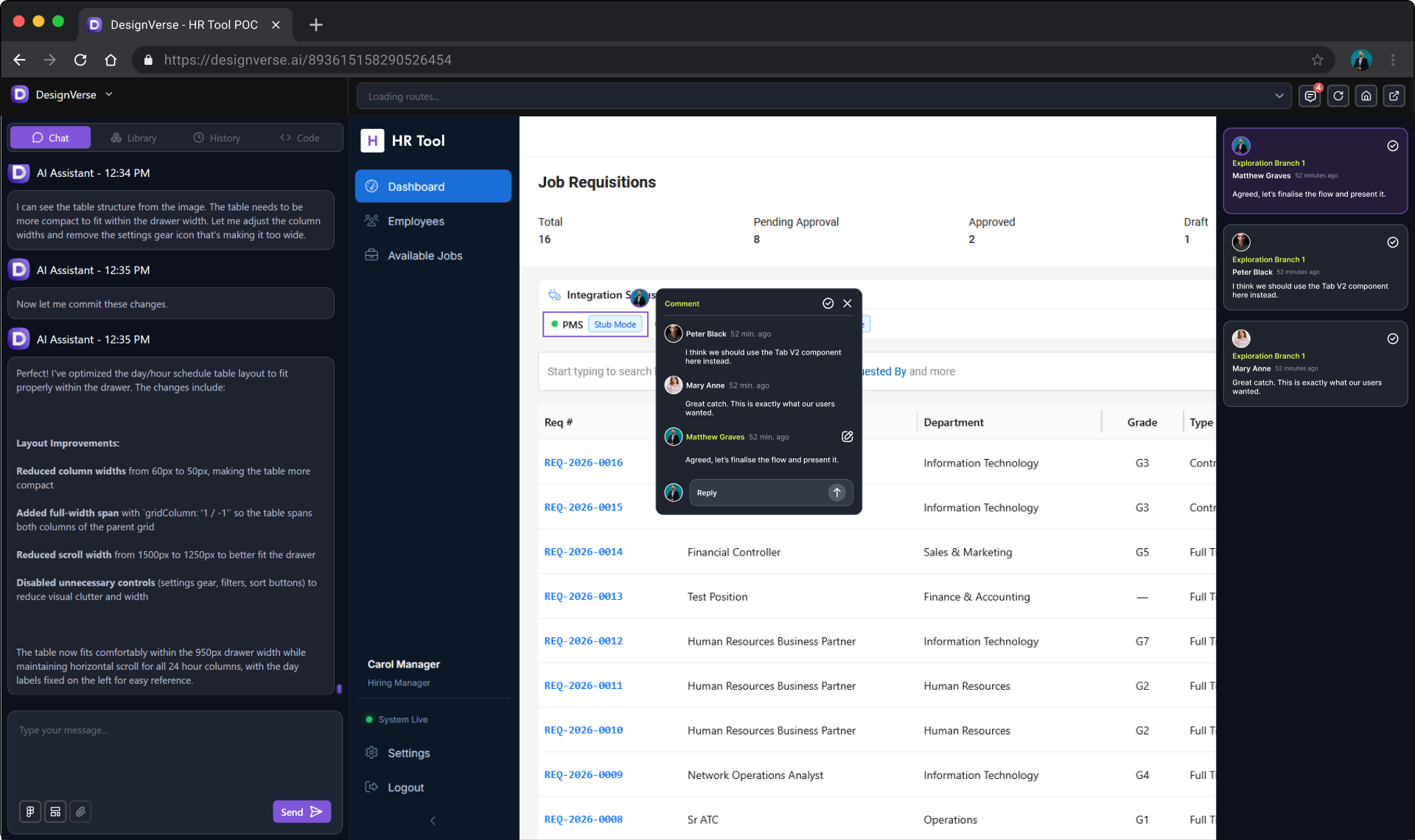
Generic AI reasons from the public internet. DesignVerse puts an engineering context layer between your prompt and the model, so it writes from your architecture, not from general knowledge.
.svg)
Replace fragmented frontend
implementations

Standardize delivery across legacy
and modern systems
.svg)
Introduce governance without
disrupting workflows
System logic, applied automatically
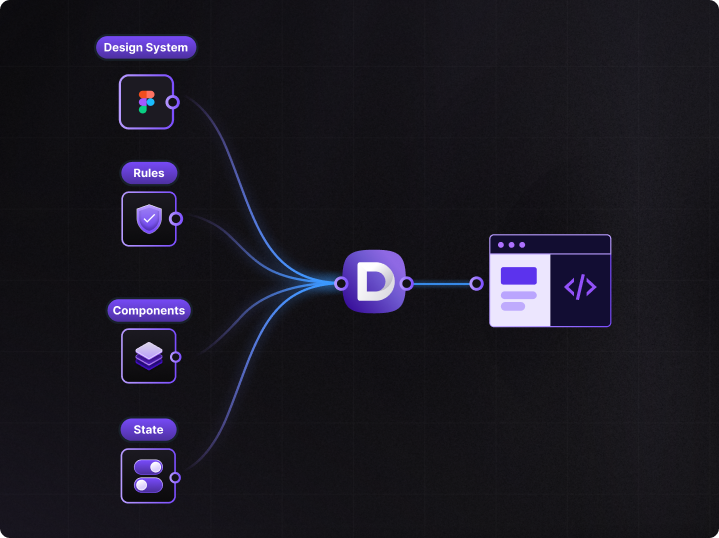
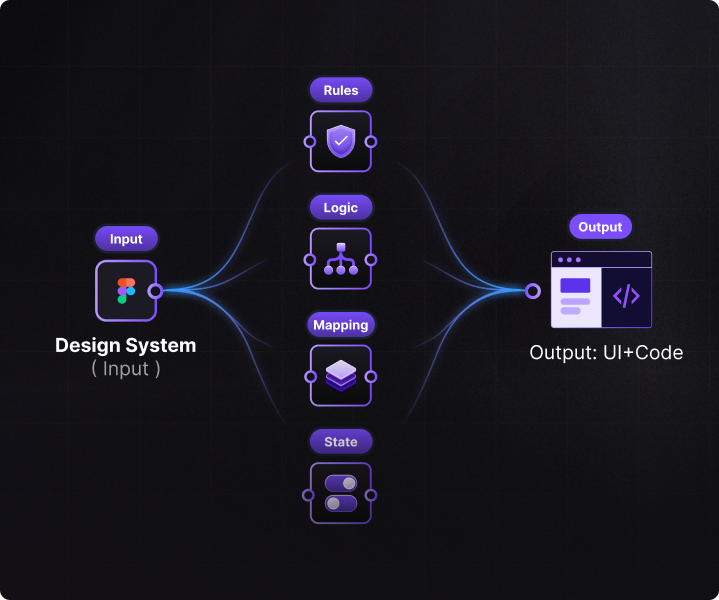
DesignVerse applies deterministic execution logic to generate consistent software output across teams.
Fragmented execution across teams and tools
Applies system-level rules (not prompt-based generation)
Maps components directly to implementation logic
Generates state-aware interfaces
Produces production-ready frontend code
Modular by design
DesignVerse separates frontend and backend execution, enabling scalable enterprise development.
Parallel development across teams
Cleaner separation of concerns
Faster delivery in complex product environments
Works with existing architecture patterns
Built for team workflows
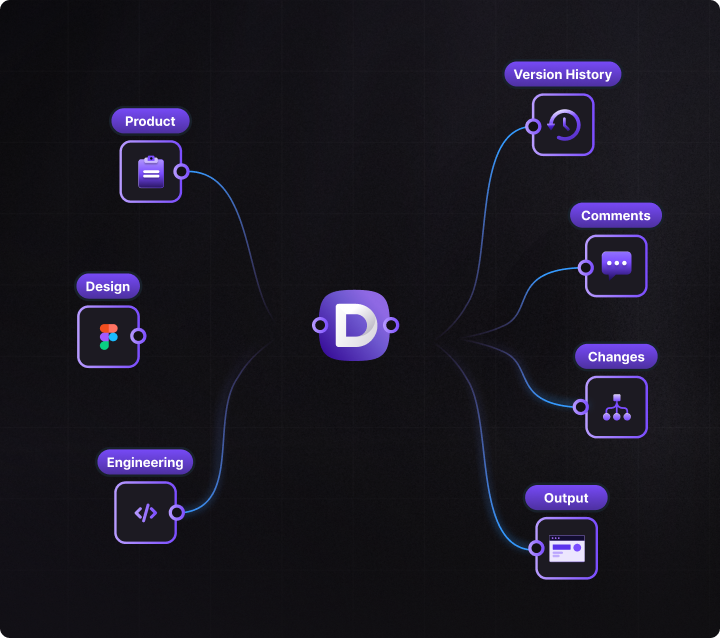
DesignVerse enables collaboration across product, design, and engineering teams.
Version history across generated output
Collaborative review and commenting
Traceable changes across systems and components
Consistent output across multiple teams and products




What can you build?
Frequently asked questions
What enterprises ask first
DesignVerse is an AI-based software development platform that creates the context layer for enterprise software production, which defines how software is built across an organization. It connects design systems, engineering standards, and product logic into a single governed execution layer so that software is produced consistently from design through to deployment instead of being interpreted differently by each team.
Enterprise software production today is fragmented across teams, tools, and standards. DesignVerse unifies design systems, architecture, and product logic into a single source of truth so teams ship consistent, governed software without rework.
DesignVerse connects directly to your existing design systems, code repositories, and documentation. Teams describe the intent of what they want to build, and DesignVerse generates production-ready output that respects every constraint, pattern, and approval already in place.
No. DesignVerse is a context layer for software production. Code generation is a side effect, not the core function. The platform governs how software is produced — ensuring every output aligns with the organization's design system, architecture, and standards.
AI coding tools assist individual developers writing code. DesignVerse operates at the organizational level, governing how entire products are built. It enforces design systems, architectural patterns, and business rules across teams — producing software that is consistent, auditable, and production-ready by default.