


We raised $5.5M to build enterprise software systems with a secure AI context layer

Introduction
AI has made software generation dramatically easier. But enterprise software was never limited by code generation.
The real challenge has always been context.
Large organizations operate on decades of architecture decisions, internal standards, regulatory constraints, and legacy systems. Every change — whether building something new or evolving what already exists — has to fit into that environment without breaking it. That’s the fundamental constraint enterprise software operates under. And that’s the problem DesignVerse is built to solve.
We’re announcing a $5.5 million seed round co‑led by Begin Capital, Gapminder VC, with continuous participation from Underline Ventures, alongside strategic angels from companies including Adobe, LSEG, Planable and UiPath.
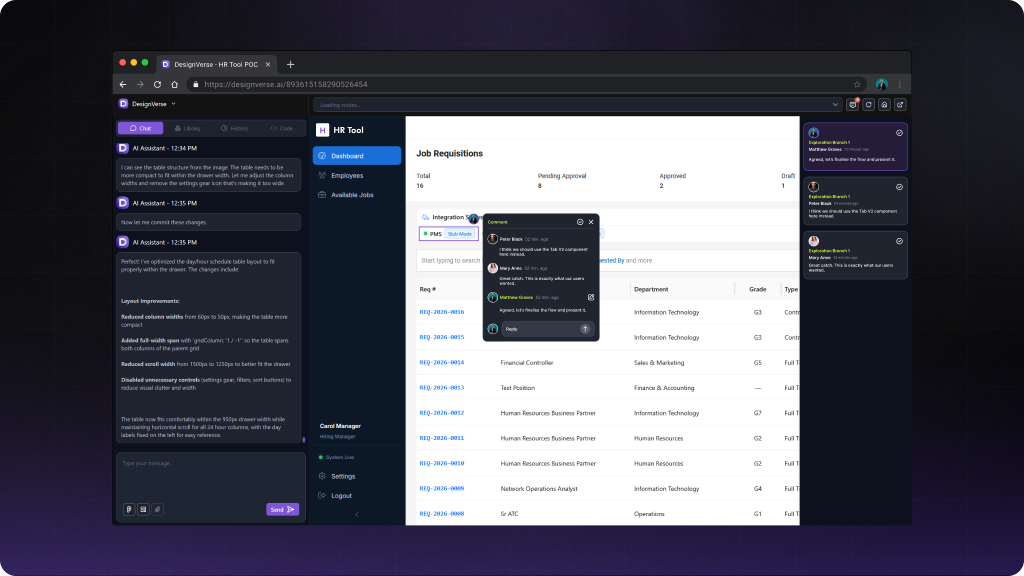
Enterprise software is constantly being re-translated
Most enterprise software isn’t created in a single step. It emerges over time through constant translation between design, engineering, documentation, and business logic.
Design systems become code. Architecture standards become assumptions. Documentation becomes interpretation. Over time, small inconsistencies accumulate into real complexity.
The result is familiar: duplicated work, fragmented systems, and software that becomes harder to evolve safely. For critical infrastructure, that complexity becomes a constraint on how fast organizations can move.
Where DesignVerse fits
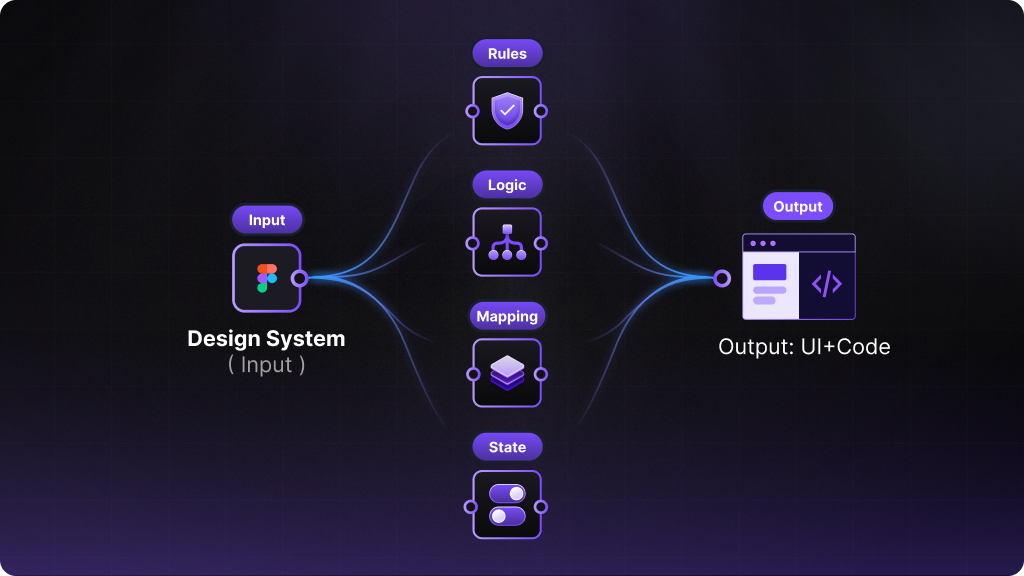
DesignVerse creates a system-level AI context layer using an organisation’s existing documentation, component libraries, architecture standards, and engineering rules.
Instead of treating software generation as isolated output, the system understands the environment the software will live in — and generates applications aligned with that system from the start.
This reduces implementation drift and allows teams to build and evolve enterprise software faster while staying consistent with existing architecture.
In practice, this can enable teams to move up to five times faster compared to traditional workflows across both new development and system evolution.
This applies across environments where software is complex, regulated, and constantly changing — including banking systems, insurance, manufacturing, cybersecurity platforms, aviation infrastructure, and large-scale public services. The constraint is always the same: building and evolving software without breaking the system it depends on.
Already supporting systems used across European aviation
One of the earliest large-scale deployments of DesignVerse has been with EUROCONTROL, the organization coordinating air traffic management across Europe.
We helped modernize a 15-year-old operational application in just over one month — compared to an estimated six months using conventional development approaches.
Today, software generated through the platform supports systems used across airports and air traffic control operations in Europe, contributing to the journeys of tens of millions of passengers every year.
“DesignVerse, through its AI platform, has supported us in modernizing our software systems at an accelerated pace, without compromising the reliability, safety and security that remain the highest priority for our sector."
— Eurocontrol
Mission‑critical systems cannot rely on workflows optimised for demos or experimentation. They require software that is reliable, auditable, architecture-aware, and capable of operating safely at scale.
That’s the environment DesignVerse was designed for.
Why enterprise AI needs a different approach
Over the last two years, AI-generated software has become mainstream. But most tools were built for prototypes, experimentation, or isolated developer workflows.
Enterprise environments are fundamentally different. Systems must integrate with existing infrastructure. Security and reliability standards must remain consistent across large engineering organisations. Regulatory and operational constraints shape every deployment decision. The challenge isn’t generating code. The challenge is generating software that can safely operate inside complex, real-world systems.
Our journey has just started.
As companies scale, the gap between design and implementation becomes one of the biggest sources of inefficiency in software development.
Designers define systems. Engineers reinterpret them manually across products, teams, and codebases. Over time, inconsistency compounds and delivery slows. We built DesignVerse to remove that translation layer.
Instead of generating isolated code snippets, the system understands an organisation’s existing architecture, design standards, documentation, and engineering patterns — allowing teams to generate software that aligns with how the business already operates.
The DesignVerse Team.